The advice you hear most often about Lusha alternatives is usually bad advice for recruiting. Switching providers fixes nothing if the real bottleneck sits somewhere else in your workflow. Sometimes the missing piece isn't the database. It's email accuracy, usable phone numbers, better filters, LinkedIn integration, automated first touch, or a clear way to measure which credit actually turns into a conversation.
In Spain, the context forces you to look past raw volume. Sourcing happens in a market where almost 18 million people visited job sites every month in 2023, and LinkedIn passed 11.7 million monthly users in Spain, according to the analysis cited by Yena using GfK DAM data. That changes the question. "Which tool finds contacts" isn't enough — you want to know which one helps you discover profiles, verify data and reach out quickly without breaking the way you already work.
For agencies, staffing firms and in-house teams, I'd always separate three layers. Sourcing. Enrichment. Outreach. Some tools do one of them very well. Others promise to cover everything and then fall short at exactly the step that eats most of a recruiter's day.
Rule of thumb: don't buy a Lusha alternative for its database. Buy it for the real time it saves you up to the first valid contact.
Here are 10 Lusha alternatives seen through that lens. Full suites, LinkedIn extensions and enrichment services. The difference that matters isn't the feature list. It's which one fits your actual workflow and your ATS.
1. HeyTalent
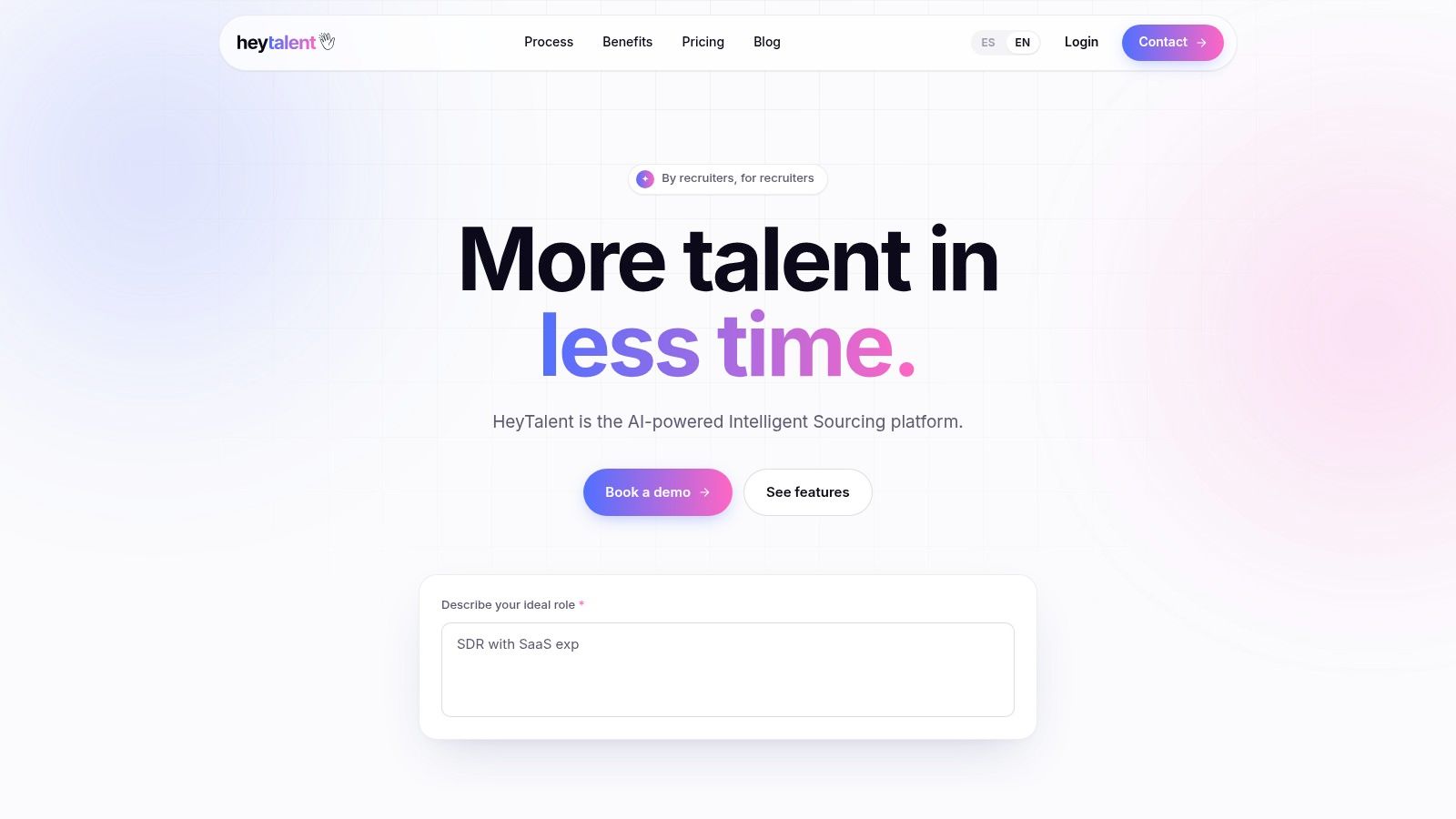
HeyTalent fits one very specific case: recruiting teams that already have an ATS and want to speed up everything that happens before it — finding profiles, enriching emails and phone numbers, filtering better, and launching the first touch without assembling a four-tool stack.
Its pitch makes sense when you look at how a headhunter actually works. First you search LinkedIn with Booleans or AI assistance. Then you enrich the data. Then you filter on criteria finer than job title and company. Finally, you reach out and measure what turns into a conversation. HeyTalent brings search, enrichment and outreach into a single workflow, and that's where its value sits.
Where it stands out most is filtering.
Plenty of tools on this list will pull contacts for you. Fewer let you work with custom variables that come close to how a real recruiter prioritises: seniority that's actually useful for the role, stability, English level, signals about the type of company, or patterns in someone's career history. If your team runs niche searches, that matters more than having a huge but imprecise database.
Where it fits best
I find it especially useful in agencies, RPOs and Talent Acquisition teams juggling several open roles on short deadlines. It also fits when the ATS already handles pipeline and reporting, but you're missing an operational layer for sourcing, enrichment and outreach. In that scenario, the purchase isn't really competing with Lusha — it's competing with carrying on jumping between LinkedIn, a spreadsheet and two other tools.
In Spain, that approach lines up well with teams already working on top of an ATS who just need to get faster to the first valid contact. Blat's analysis of the Spanish ATS market points the same way. The opportunity is usually in complementing the core system, not replacing it.
- Best for: teams that want sourcing, enrichment and outreach in one flow, with more control over how they filter candidates.
- Weakest fit: recruiters who only need the occasional email, or who already have sourcing nailed and want a specialist data tool.
- What to check during the trial: if your campaigns include LinkedIn connection requests with a note, check whether you need LinkedIn Premium Business and add that to your real cost.
It also helps that the pricing is public and quoted in euros. HeyTalent publishes plans for individual recruiters, agencies and larger teams, with an annual discount. That makes it easy to compare without going through sales first. Even so, treat any savings or performance figure as a commercial promise until you've validated it with a short trial, using your roles, your recruiters and a real sample of profiles.
If the bottleneck sits between receiving the brief and starting conversations, HeyTalent is worth a serious trial. If you just want a database to export contacts from, there are simpler and cheaper options on this list.
2. Apollo.io
Apollo.io usually makes the shortlist for a simple reason: it covers several stages of the headhunter's workflow without forcing you to build a separate stack for each one. You can search companies and contacts, enrich emails, validate part of the data and launch sequences from the same place.
That saves time if your bottleneck isn't only finding profiles, but getting from an initial list to first messages sent.
The important nuance is elsewhere. Apollo works better as a hybrid data-and-outreach platform than as a tool designed from recruiting first principles. For talent acquisition teams with processes close to B2B outbound, it fits well. For a boutique search firm leaning heavily on LinkedIn, manual assessment and highly personalised outreach, the workflow can feel heavier than it needs to be.
The place to look closely is the real trial. "Does it find contacts" isn't enough. Separate three questions: how many relevant profiles you locate, how many emails or phone numbers come back usable, and how much extra work it takes to filter out noise before reaching out. That's where Apollo wins or loses against tools more specialised in sourcing or enrichment.
Its credit model also changes how the price feels. In the demo it looks flexible. In daily operation, the real cost depends on which actions burn credits, how much data you end up discarding, and whether you'll genuinely use sequences, integrations or the API. If you only need to enrich a shortlist you've already worked in your ATS, you can end up paying for layers that add little.
A sensible way to evaluate it is to treat it as two tools in one. First, as a search and enrichment engine. Second, as an outreach layer. If it passes on both, it makes sense. If it only shines on one, compare the cost against a simpler combination.
- Clear fit: teams that want to centralise search, enrichment and sequences, and that work at enough volume to use several parts of the product.
- Weak fit: recruiters who depend heavily on direct mobile numbers in Europe, very fine-grained searches over scarce profiles, or a workflow that lives almost entirely inside LinkedIn.
- What to test before buying: one real role, 30 to 50 target profiles, valid email rate, phone coverage in your markets, and time from shortlist to first message sent.
Apollo makes sense as a complement to the ATS, not a replacement for your core system. If your operation needs to measure the full step from sourcing to reply, it deserves a serious trial. If you only want occasional data to reach out sooner, there are simpler and, in several cases, cheaper options on this list.
3. ZoomInfo
ZoomInfo plays a different game. It's an enterprise suite with Sales, Marketing, Operations and Talent modules. If comparing it to Lusha feels reductive because your operation needs org charts, intent signals and deep integrations, ZoomInfo belongs in the conversation.
In recruiting, that mainly makes sense for large companies, consultancies with a mature stack, or international teams already working with highly structured processes. It isn't what I'd recommend to a small agency that just wants to find email addresses and start calling sooner.
When it works and when it doesn't
Its historical strength is closely tied to data depth in the United States and to large operations. If your main focus is EMEA and you depend heavily on direct mobile numbers in Europe, I'd compare very carefully before assuming that "more enterprise" means "better for recruiting".
The commercial model is another clear factor. There's no simple public price. That isn't necessarily bad, but it lengthens the purchase and complicates comparison with more transparent tools.
ZoomInfo makes sense when you're buying an ecosystem, not just contacts.
For a talent acquisition team inside a large company, it can be a powerful layer if there's already a serious data, CRM and reporting strategy in place. For a staffing firm or an independent headhunter, it's usually more tool than the job needs.
4. Cognism
If your real workflow depends on finding a profile on LinkedIn, pulling a direct mobile number and calling that same day, Cognism is worth a serious trial. Its fit shows up above all in EMEA recruiting, where Lusha and several databases built for US sales tend to be weaker on coverage, mobile reliability or compliance posture.
I wouldn't buy it for raw contact volume. I'd judge it on a narrower question: how many profiles relevant to your searches come with genuinely actionable data. In middle-management and commercial searches across Europe, that difference changes a team's productivity.
Cognism sits in the enrichment and contact layer, not so much in pure discovery. That matters when comparing it to other Lusha alternatives. If your ATS is already sorted and sourcing starts on LinkedIn or in your own databases, it can work very well as the second piece of the stack. If you're expecting a broad database experience for exploring a market from scratch, validate that point in a demo with real cases from your team.
There's another filter that recruiting tends to overlook until legal or IT show up. Cognism has built much of its offer around traceability and privacy. In Spain, handling candidate data demands considerably more than "having the email", as EuroComply's sector guide for HR in Spain summarises. For agencies with enterprise clients, or in-house teams under frequent legal review, that weighs on the decision.
What tends to work best with Cognism:
- searches across Europe where a direct mobile number is worth more than thousands of records
- teams that measure contact quality, not just exported volume
- operations with procurement or legal who will ask where the data came from and how it's used
The limits are just as clear. The sales process is usually less nimble than self-service tools. And if your priority is pulling data quickly inside LinkedIn with a lightweight extension, Kaspr will feel more immediate. Cognism fits better in teams that already know which roles they're attacking, which markets they're prioritising and which part of the funnel they want to improve: phone, email or contact rate.
My practical recommendation is to test it with a simple matrix of 30 to 50 real profiles per country and per seniority. Measure four things: email coverage, mobile coverage, data validity, and how easily that contact moves into your outreach workflow. That shows quickly whether you're looking at a better Lusha alternative for your operation, or just a more expensive tool with a good compliance narrative.
5. Kaspr
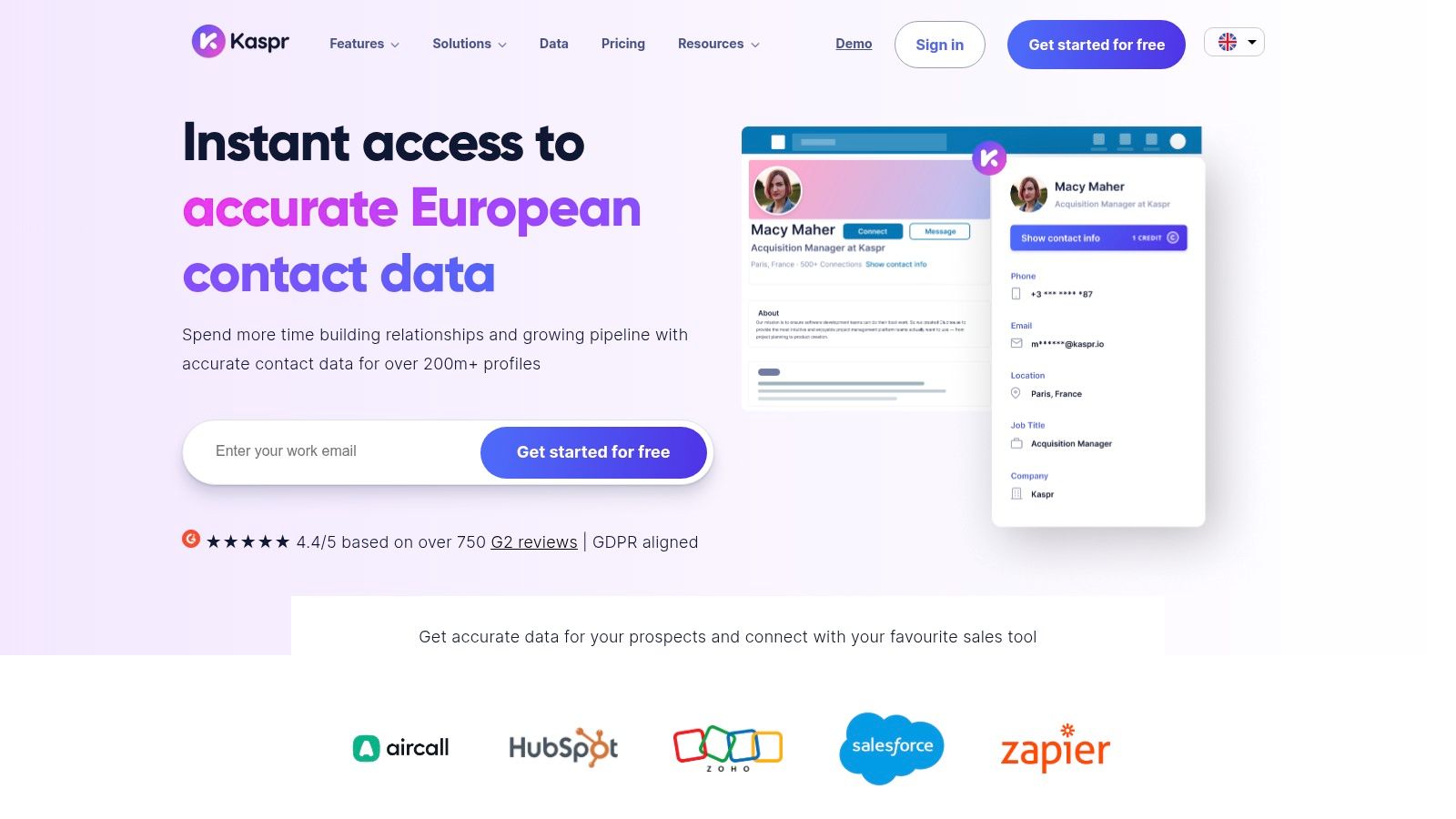
Kaspr tends to win at one very specific part of the headhunter's workflow: pulling contact details quickly while you're reviewing profiles on LinkedIn. If your actual day consists of opening searches, going into profiles, checking whether they fit and deciding in seconds whether they're worth contacting, Kaspr cuts steps. It doesn't stand out for its own database or for outreach analytics. It stands out for immediacy.
I've seen it work best in small teams where speed matters more than a sophisticated stack. A recruiter on Recruiter Lite, a two- or three-person agency, or a freelancer who lives on LinkedIn will get value from it sooner than a team with longer processes, multichannel sequences and serious reporting.
Its place in the Lusha comparison also becomes clear if you split the work into phases:
- Sourcing: heavily dependent on LinkedIn. If that's where you find most of your candidates, it fits.
- Enrichment: useful for getting an email and phone number without leaving the profile, but shallower than tools built to enrich whole lists.
- Filtering and prioritisation: limited. It doesn't replace a database with advanced filters by market, company size or change signals.
- Outreach and measurement: falls short if you want sequences, testing or fine-grained tracking by channel.
That's the real buying decision. Kaspr speeds up the moment of capture. It doesn't solve what comes next nearly as well.
It's also worth checking the operational ceiling before buying. If the team needs to go from 30 profiles a day to broader campaigns, or to combine sourcing with automation and reporting, the extension stops being enough and tools covering several funnel stages start to matter more. If your question is about how data is handled when capturing from LinkedIn, it's worth reading this guide to sourcing for recruiters under GDPR.
I'd test Kaspr differently from Cognism or ZoomInfo. Here I wouldn't measure coverage alone. I'd run a desk test with 25 real profiles, mixing seniority, country and company type, and time three things: time to a usable data point, percentage of profiles with a mobile or email, and how easily that contact moves into the ATS or the outreach tool. If you gain speed but the data then doesn't fit your workflow, the saving disappears.
Kaspr works well as a tactical complement to the ATS. Above all for recruiters who want to move faster inside LinkedIn without paying for a broader suite they'll barely use. If you're looking for one system covering sourcing, enrichment and outreach, there are more complete options. If you want execution speed in the daily trenches, it's still a reasonable buy.
6. Dropcontact
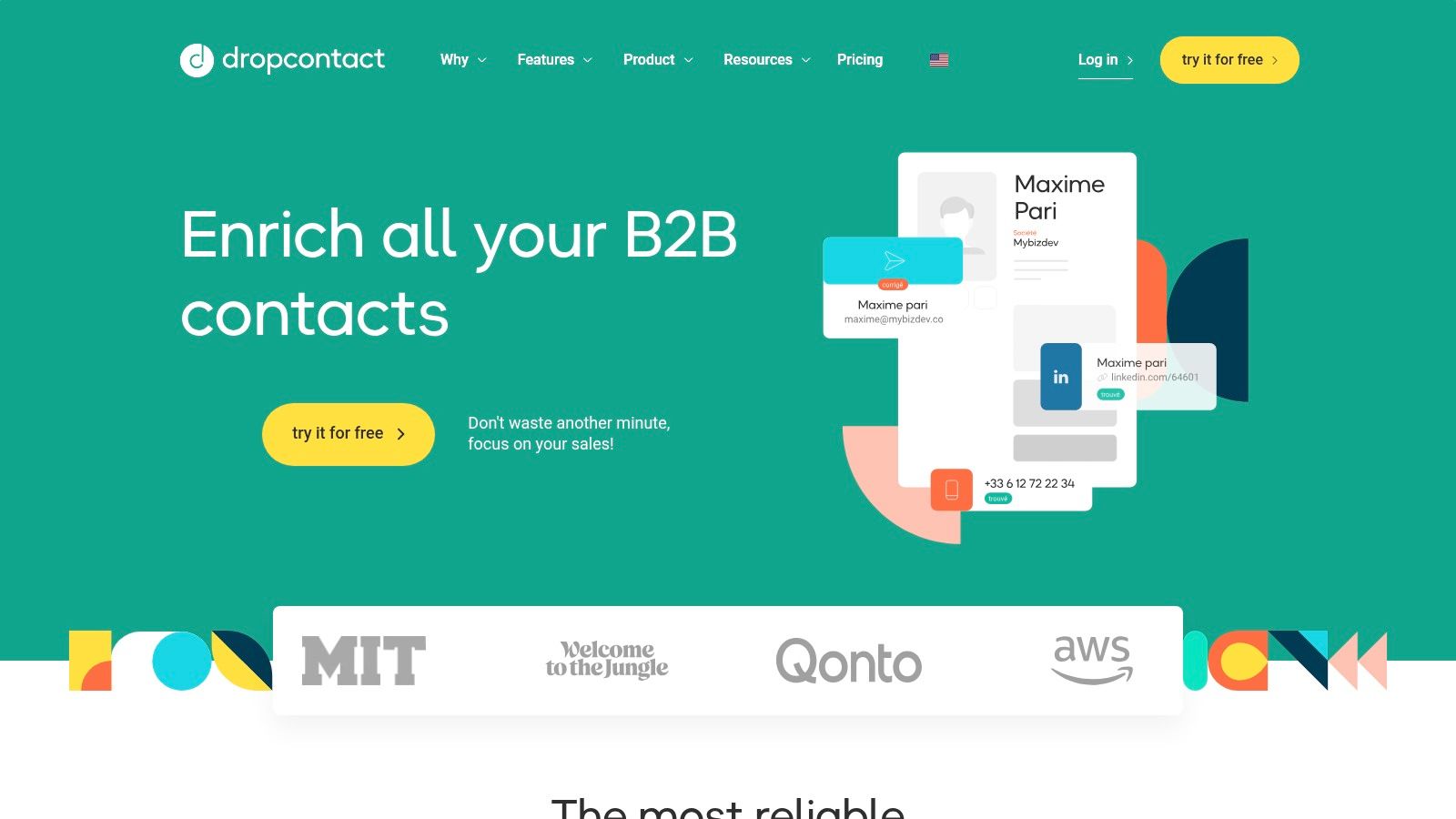
Dropcontact doesn't compete the way Lusha does. That's exactly what makes it interesting. Its main focus is enrichment, cleaning, deduplication and data refresh, with processing inside the EU and a story built firmly around privacy.
If your problem isn't "finding people" but "turning a list into usable contacts with less risk", it deserves a close look. I've seen it fit best in teams that already have a source of profiles and want to clean and enrich before exporting to the ATS, the CRM or the outreach tool.
Where it adds value
In Spain, data accuracy and quality are not a side detail. The AEPD, the Spanish data protection authority, points out that accuracy, adequacy and quality are central principles when processing personal data with AI, according to its guidance on AI and data protection. That makes a tool that cleans and validates before the data is used in sourcing far more relevant.
Dropcontact tends to appeal to organisations that prioritise privacy, European hosting and cleaner processes. The trade-off is simple. It doesn't use a "waterfall" approach with third parties, so in some niches coverage can fall short of more aggressive suites.
If legal risk weighs almost as much as coverage, Dropcontact enters the conversation very quickly.
I wouldn't buy it as a single recruiting tool. I would buy it as an enrichment and clean-up layer to complement an existing workflow.
7. RocketReach
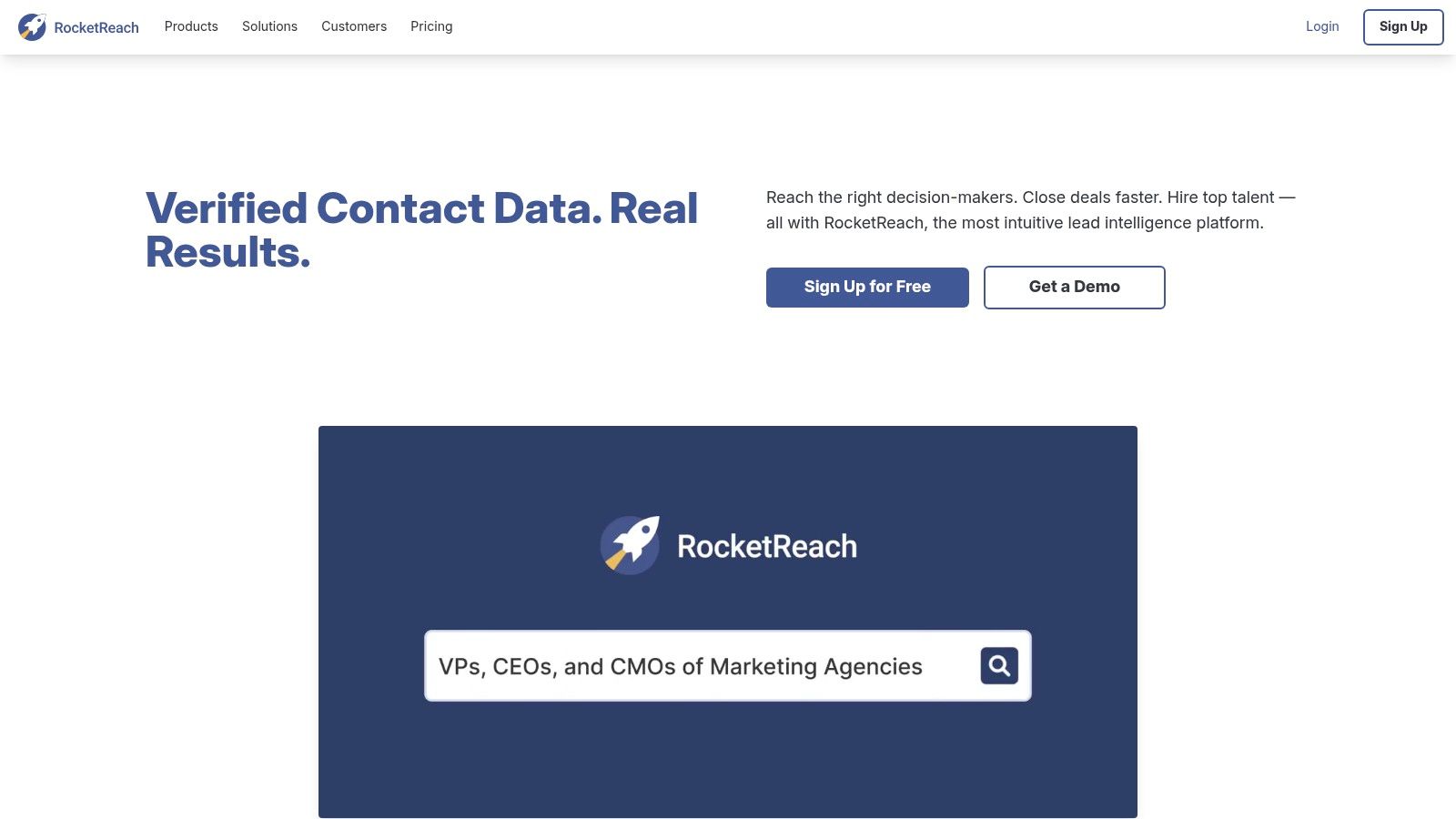
RocketReach tends to fit one very specific point in a headhunter's workflow. You've already located the profile on LinkedIn, in your ATS or through your own search. What's missing is turning that profile into a usable email or phone number without committing to a heavy suite.
That's where it works well.
I've seen it perform better as an enrichment layer than as a central recruiting platform. For an independent recruiter, a search boutique or a small team working with several talent sources, that distinction matters. RocketReach handles lookup, validation and export quickly, but leaves out part of the orchestration that follows.
If you compare it to Lusha in a real trial, the question isn't only how many contacts it returns. The useful question is which step of the process it saves you most time on. RocketReach adds value in three clear scenarios:
- lists of profiles that need fast enrichment
- one-off searches via extension or web app
- workflows where outreach and measurement already live in another tool
That nuance changes the purchase. If your ATS is well set up and you only need to improve the contact layer, it can make more sense than paying for a broader platform you'll only half use.
Where you should be strict is the trial. I'd check four things before signing: real coverage in your markets, phone quality versus email quality, credit limits, and how easily data moves out into your stack. If a tool finds acceptable emails but the mobile numbers fail on executive or technical profiles, the impact shows up immediately in response rates and productivity.
RocketReach doesn't strike me as the best option for teams that want sourcing, sequences, reporting and team coordination from one place. It does strike me as a sensible option for anyone who splits the stack by function and would rather pick one good enrichment piece than a more closed suite.
In a simple evaluation matrix, I'd rate it high on ease of adoption and solid on flexibility. More modest on operational depth if what you want is to run the whole recruiting funnel from the same platform.
8. Hunter.io
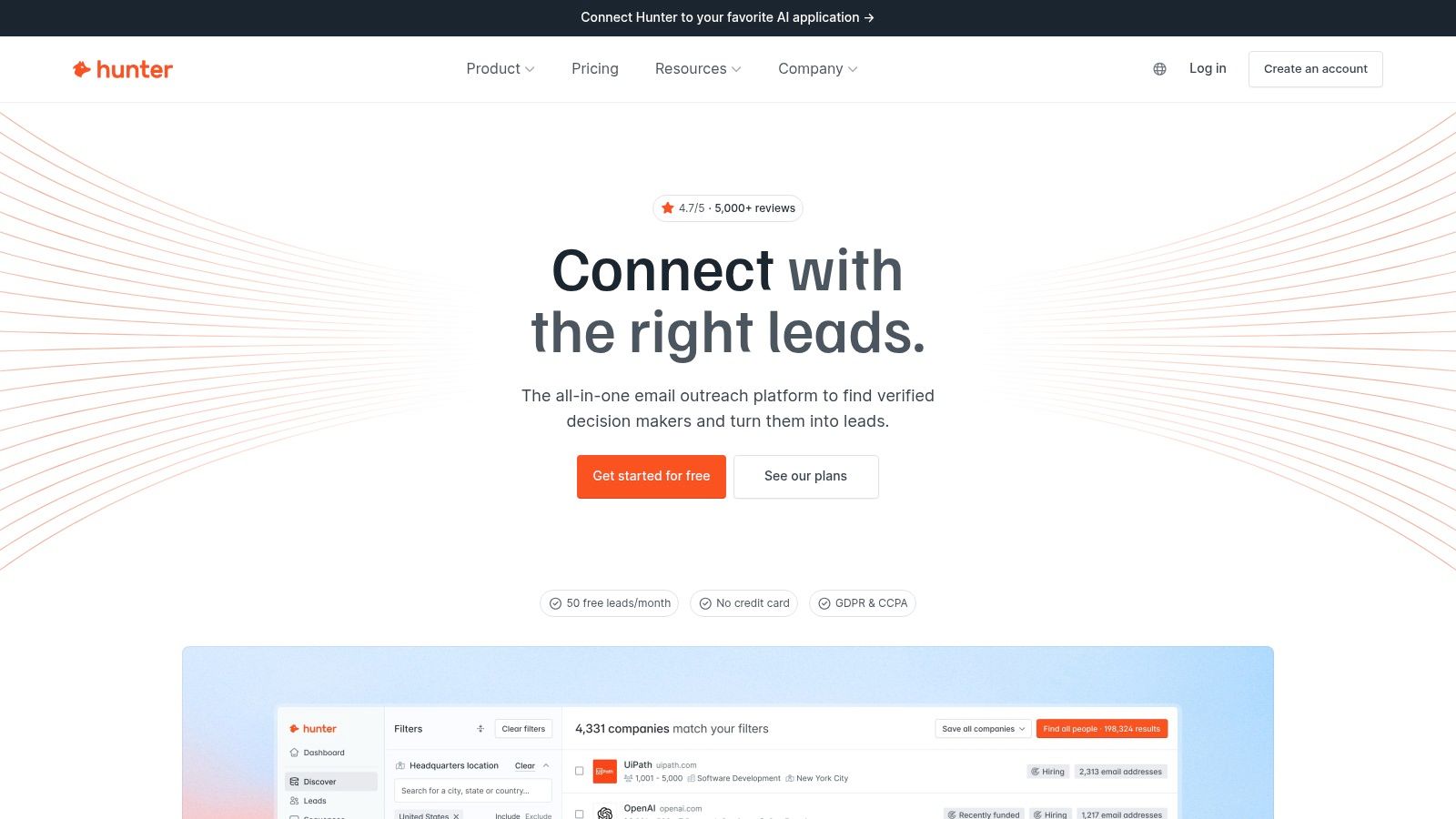
Hunter.io is still a reference point when the problem is almost purely email. Not phone numbers. Not a big talent database. Not a full sourcing suite. Email Finder, Domain Search and Verifier. Clear, predictable and easy to explain to any recruiter.
That gives it a real advantage. If your team already finds profiles well on LinkedIn or elsewhere, and all that's missing is locating and validating a corporate email address, Hunter usually solves it without functional overhead.
When email is enough
Not every role needs a phone number. For many qualified-profile processes, a well-personalised email works better than a first attempt by phone. In Europe, some industry reports published in 2026 put the median response rate in Spain at around 32%, and suggest personalised messaging lifts it above 40%. That favours simple tools, as long as the team genuinely personalises afterwards.
Hunter falls short if your main channel is the phone or if you want a richer enrichment layer. But as a specific piece of the stack, it still works very well. If you're comparing options for getting contact data in recruiting, it's one of the easiest to test without noise.
- Logical buy: when you want an email finder and verifier without paying for features you won't use.
- Wrong buy: when the role demands a fast call, a direct mobile number or multichannel automation.
9. Snov.io
Snov.io is a lightweight suite mixing finder, verifier, email campaigns and a basic CRM. For SMEs, agencies and recruiters who want more than enrichment but without moving to a heavy platform, it makes sense.
I wouldn't single out Snov.io for any one function. Its appeal is the balance. You can find an email, verify it, build a drip campaign and track activity without assembling an overly complex stack.
What to actually expect
The strong point is time-to-outreach. If your team loses time exporting between several tools, Snov.io cuts steps. The less attractive part is that the credit system can change, so it's worth checking current terms before comparing costs.
I'd also add an important note for recruiting in Spain. The moment a company collects a name, email, phone number or IP address, that data falls under the GDPR and the Spanish LOPDGDD, and the recommendation is to limit information to what's strictly necessary and to inform the candidate when automated systems or AI are used, according to this legal explainer on data protection in the employment relationship. If you're going to run campaigns, don't look only at functionality. Look at traceability and data minimisation.
- Best for: agencies and small teams that want to join email data and campaigns.
- Worst for: teams that depend on verified mobile numbers in EMEA, or on deeper reporting.
- Buying tip: separate the email quality test from the sequence performance test.
10. Clearbit
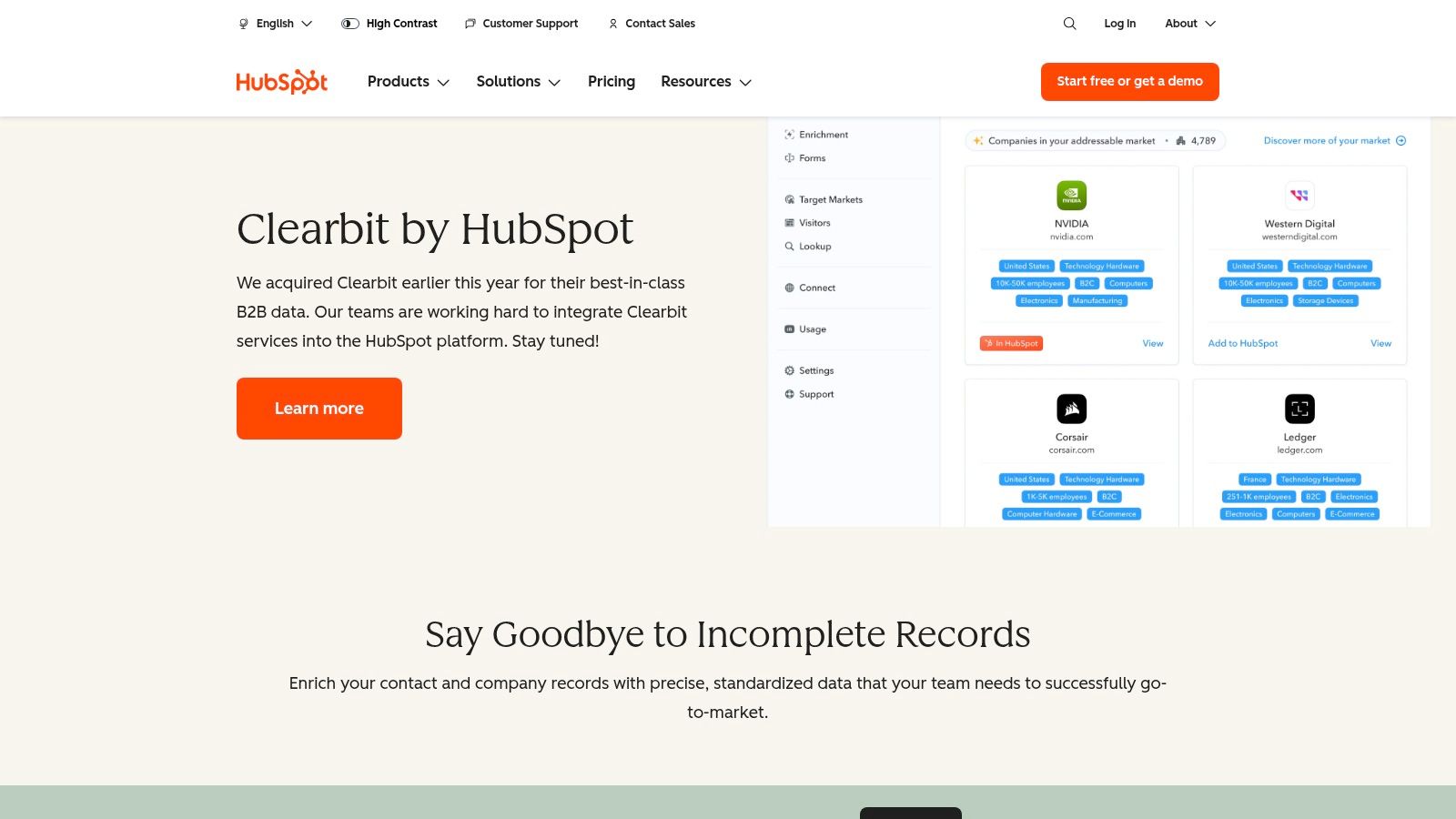
Clearbit by HubSpot isn't a classic Lusha alternative for recruiters. It's more of an enrichment option embedded in the HubSpot ecosystem. If you already work there, the conversation changes completely.
Instead of asking "which tool gives me more contacts", the question here is "how do I activate account and contact data inside the CRM and the workflows the business already uses". For talent teams tightly connected to operations, RevOps or centralised corporate processes, that integration can be worth more than a Chrome extension with a fast lookup.
When it makes sense
It makes sense when HubSpot weighs more than specialised sourcing. Also when the data flow between marketing, sales and recruiting needs common governance. If you don't use HubSpot as your main system, it loses a lot of its appeal.
The other nuance is that I wouldn't buy it expecting a recruiter-first experience. There are better options for that. I'd buy it if the priority is enrichment and data activation inside HubSpot. If you want to go deeper on that approach, it's worth reviewing how data enrichment applied to recruiting works.
- In favour: native HubSpot integration and direct activation in workflows.
- Against: less plug-and-play for pure recruiting, and a clear dependency on the HubSpot ecosystem.
- Best buyer: a company with a consolidated enterprise stack and processes shared across teams.
Comparison: 10 Lusha alternatives
| Product | Key features | Coverage and data quality | Target audience | Value proposition and pricing |
|---|---|---|---|---|
| HeyTalent (recommended) | LinkedIn extraction + enrichment (emails/phones); custom AI variables; automated outreach | Profiles refreshed in real time; recruiter-led approach; GDPR compliance | Freelance recruiters, agencies and large teams sourcing at scale | End-to-end AI sourcing; cost savings (up to 5x vs LinkedIn Recruiter); plans from €109/month (2k candidates), €214/month (5k), €599/month (14k); -15% annually |
| Apollo.io | B2B database, Chrome extension, enrichment and verification, sequences and dialer, API | Global B2B coverage; self-serve entry; quality varies by region | Sales and talent teams prospecting and reaching out at scale | All-in-one platform for prospecting + outreach; scalable credit model |
| ZoomInfo | Modular suite (Sales/Marketing/Talent), intent data, org charts, deep integrations | High depth in North America; enterprise support | Large organisations, ABM and complex workflows | Advanced data and signals for enterprise; custom pricing (geared to large scale) |
| Cognism | Diamond Data (verified mobiles/emails), manual verification, ISO/SOC2, GDPR-first | Strong EMEA coverage and mobile verification; solid compliance | EU/UK teams that prioritise privacy and human verification | Privacy-first approach with extra verification; sales-led model, no public price list |
| Kaspr | Chrome extension for LinkedIn; real-time extraction of emails and phones; Recruiter Lite support | Very fast inside the LinkedIn workflow; coverage and verification vary by country | Recruiters sourcing directly from LinkedIn | Simple to use, free plan and pay-as-you-go; minimum 20 LinkedIn connections |
| Dropcontact | Enrichment, cleaning, deduplication; 100% EU processing; audited by the CNIL | Excellent GDPR compliance; best performance in France/Eastern Europe | European organisations with a strong privacy focus | European processing and CNIL audit; euro pricing; regional coverage varies |
| RocketReach | Email/phone search, extension, API, bulk lookups, AI enrichment | Public plans; good cost-to-volume ratio for freelancers | Freelancers, small agencies and recruiting/sales teams | Easy entry and flexible exports; check renewal terms for price increases |
| Hunter.io | Email Finder, Verifier and Domain Search; clear API and unified credits | Reliable for corporate emails; no phone numbers | Marketing and sales that only need corporate emails | Transparent pricing and credits; ideal when phones aren't required |
| Snov.io | Email search/verification, drip campaigns, basic CRM | Good feature-to-price balance for SMEs; limited EMEA mobile verification | SMEs and agencies wanting to link enrichment + email outreach | Integrated campaigns and basic CRM; credit/token model |
| Clearbit (HubSpot) | Account and contact enrichment inside HubSpot; Forms, Visitors, Target Markets | Native HubSpot integration; data designed for CRM/RevOps | Teams using HubSpot as their main CRM | Data activation in HubSpot workflows; cost depends on HubSpot packaging |
How to choose and test without switching blind
The worst way to buy a Lusha alternative is to compare screenshots, promises and feature lists. The best way is to test the real workflow. Find profiles, enrich, filter, reach out and measure. Without mixing the layers.
The Spanish market gives you reasons to do this properly. In 2024, InfoJobs recorded 2,447,457 vacancies, 4,060,366 registered jobseekers and 128,124,313 total applications, almost 3% more than in 2023. On top of that, in 2025 an average of 56 candidates per role posted on InfoJobs was reported, four more than the previous year, according to this compilation of employment and application statistics in Spain. That doesn't mean roles are easy to fill. It means there's more noise, more filtering and more need to prioritise the first useful contact well.
I'd run the migration in five steps.
- Define your market and target profiles: don't test a tool with easy profiles if your business lives on scarce positions. Use real roles, real countries and real seniority levels.
- Export a representative sample: the sample should look like your usual work. If you work in tech, don't test with generalist profiles.
- Measure emails and phones separately: a provider can win on email and lose on mobile. If you blend the two, you'll buy badly.
- Calculate cost per usable contact: not per credit, not per export, not per record. Per contact you can genuinely use.
- Review consent, opt-out and GDPR handling: in recruiting in Spain this isn't an add-on. It's part of the purchase.
Don't mix sourcing results with outreach results. A tool can give you better contacts and still look worse if the message, the channel or the personalisation were mediocre.
Personalisation matters especially in tight markets. In Spain the demand context is shifting too. An EU jobs digest published in 2026 noted that in H1 2026 AI/ML vacancies grew 19% year on year, and that HealthTech hiring in Spain grew 11% year on year, with rising requirements around integration, HL7/FHIR, identity and audit logging, according to this analysis of specialist hiring in Europe. In roles like those, the tool that filters better and speeds up contact usually wins, not the one that simply shows more names.
My contextual recommendation would be this. HeyTalent fits best when the recruitment team needs to join Boolean or AI-assisted search, custom filters, enrichment and outreach in one continuous flow, complementing the existing ATS. Hunter.io or Dropcontact fit better when the main problem is email and privacy. Kaspr works very well for a fast, LinkedIn-centred workflow. Cognism stands out if your priority is EMEA coverage and verified mobile numbers. ZoomInfo or Clearbit make more sense when the enterprise or HubSpot ecosystem weighs more than specialised sourcing.