Recruit CRM can be replaced by three different kinds of tool: a suite that combines an ATS with a sales CRM, a sourcing platform that fills the pipeline before the ATS, or a lightweight ATS for small teams. If the bottleneck is finding and reaching candidates, the first alternative to evaluate is HeyTalent, which combines LinkedIn sourcing, AI variables, email and phone finder, outreach sequences and a free ATS. The right choice depends on where the agency actually gets stuck (winning clients, finding candidates or managing applications), not on how many modules a product ships. In Spain the regulatory frame matters too: GDPR and the EU AI Act both apply to software that filters candidates.
What is a Recruit CRM alternative
A Recruit CRM alternative is any software that covers at least one of the two layers Recruit CRM combines: the ATS, which handles candidates and applications, and the agency CRM, which handles clients and placements.
That definition opens up three families. Staffing suites replace both layers. Sourcing platforms replace neither: they sit before the ATS and solve prospecting, contact enrichment and the first message. Lightweight ATS products cover application management with a minimal commercial layer.
The practical consequence is that "alternative" does not always mean "replacement": an agency whose ATS works well does not need to swap it out, it needs more contactable candidates going into it.
Why recruitment agencies in Spain are reviewing their software in 2026
The pressure comes from scarcity. In 2025, 75% of companies in Spain reported difficulty finding the profiles they need, according to ManpowerGroup's annual study.
The technical gap sustains it: Spain is approaching 940,000 ICT specialists, but 2023 created 55,000 technical roles against fewer than 45,000 graduates, according to the figures compiled by Fundación VASS.
Digital maturity lags behind: 83% of companies admit they have not yet reached an optimal level of HR digitisation and only 37% have adopted AI, according to the barometer cited by Democrata.
Spending grows slowly: the Spanish ATS market was estimated at $83 million in 2025 and could reach $98 million by 2032, at a projected CAGR of 2.3% between 2026 and 2032, according to 6Wresearch.
The 10 Recruit CRM alternatives compared in 2026
| Product | What it solves | Who it fits | Pricing (September 2026) |
|---|---|---|---|
| HeyTalent | LinkedIn sourcing, AI variables, email and phone finder, sequences and an ATS | Recruiters and agencies that need to fill the pipeline | Sourcing from €109/month billed quarterly; ATS at €0 |
| Bullhorn | Native ATS and CRM, sales pipelines, integration marketplace | Mid-size and large staffing firms | Quote-based, no public rate card |
| Vincere | CRM, ATS, portals and GDPR controls in one place | Agencies consolidating their tool stack | Quote-based; portals and advanced features extra |
| JobAdder | Modular ATS and CRM, 200+ integrations | Boutiques and growing teams | Quote-based by team size and tier |
| CEIPAL ATS | AI matching and screening, workflows, VMS | High volume in IT and healthcare | Quote-based; optional vertical modules |
| Loxo | Sourcing, ATS, CRM and contact database in one layer | Executive search and boutiques | Above the average for its category |
| Crelate | ATS with a business-development CRM, dashboards, API | Firms that win work through relationships | Competitive entry price; messaging and eSignature extra |
| Manatal | AI scoring and enrichment, LinkedIn extension, Spanish-language support | Small agencies on a controlled budget | Published; 14-day trial; SSO and API on Enterprise Plus |
| Zoho Recruit (Agency) | ATS and CRM inside the Zoho ecosystem, vendor portal, multiposting | SMEs already running Zoho | Published, with a free plan and per-edition limits |
| Recruitly | Operational CRM and ATS, trigger automations, AI assessment | Agencies focused on automation | Web and data modules sold separately |
HeyTalent: the sourcing and outreach layer before the ATS
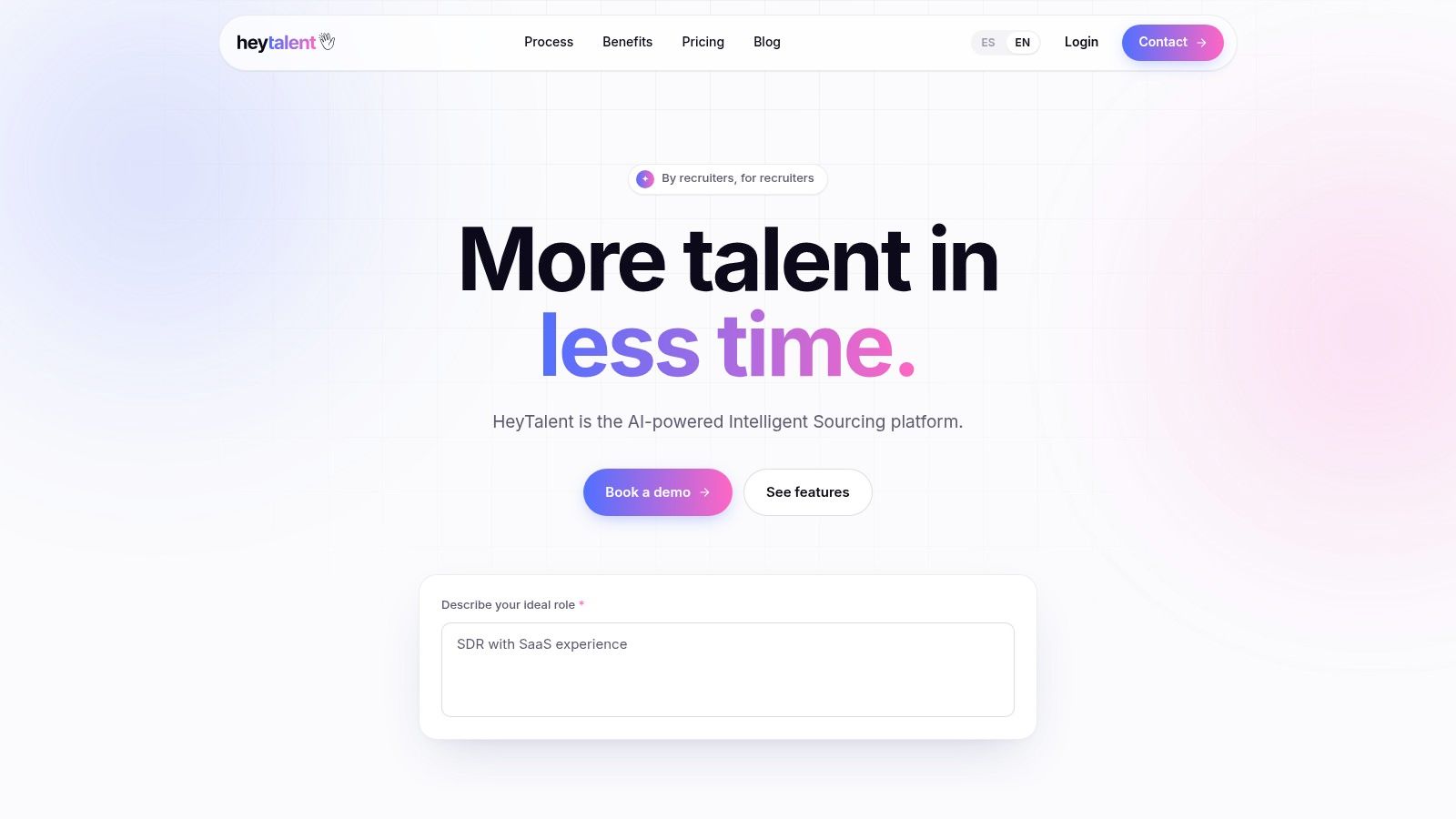
HeyTalent solves prospecting: finding candidates, getting their contact details and starting conversations without manual work. Search combines Boolean operators with filters for title, keywords, location, experience and company size, and it pulls public LinkedIn profiles at the moment of the query.
AI variables let you define criteria per role, such as spotting an advanced level of English in a candidate's history, although the final review stays with the recruiter. Outreach is part of the same flow: personalised invitations, messages and InMails with automated follow-ups.
HeyTalent offers its ATS at no cost and charges for the sourcing layer, according to the company itself, so it complements an existing ATS or replaces it when there is none. Its limit is public-profile coverage: in niches with little LinkedIn presence the available base is smaller.
Bullhorn, Vincere and CEIPAL: suites for staffing agencies
All three replace Recruit CRM outright, for operations where the sales cycle and delivery run together. Bullhorn runs a native ATS and CRM with sales, job and placement pipelines, Amplify automations and a broad integration marketplace.
Vincere targets firms consolidating their tool stack: sales CRM, ATS, email and calendar sync, web portals and GDPR controls. It requires defining fields, permissions, statuses and retention rules before go-live.
CEIPAL ATS covers high volume in IT, healthcare and general staffing, with AI matching and screening, email campaigns and VMS integration. Its AI roadmap is not the same as capability available on every plan.
The price of that breadth is implementation: a team that only wants to build lists and launch outreach will hit a steep learning curve. Test the fit against this selection of the best ATS platforms for the United States.
Manatal, Zoho Recruit and JobAdder: alternatives for small agencies
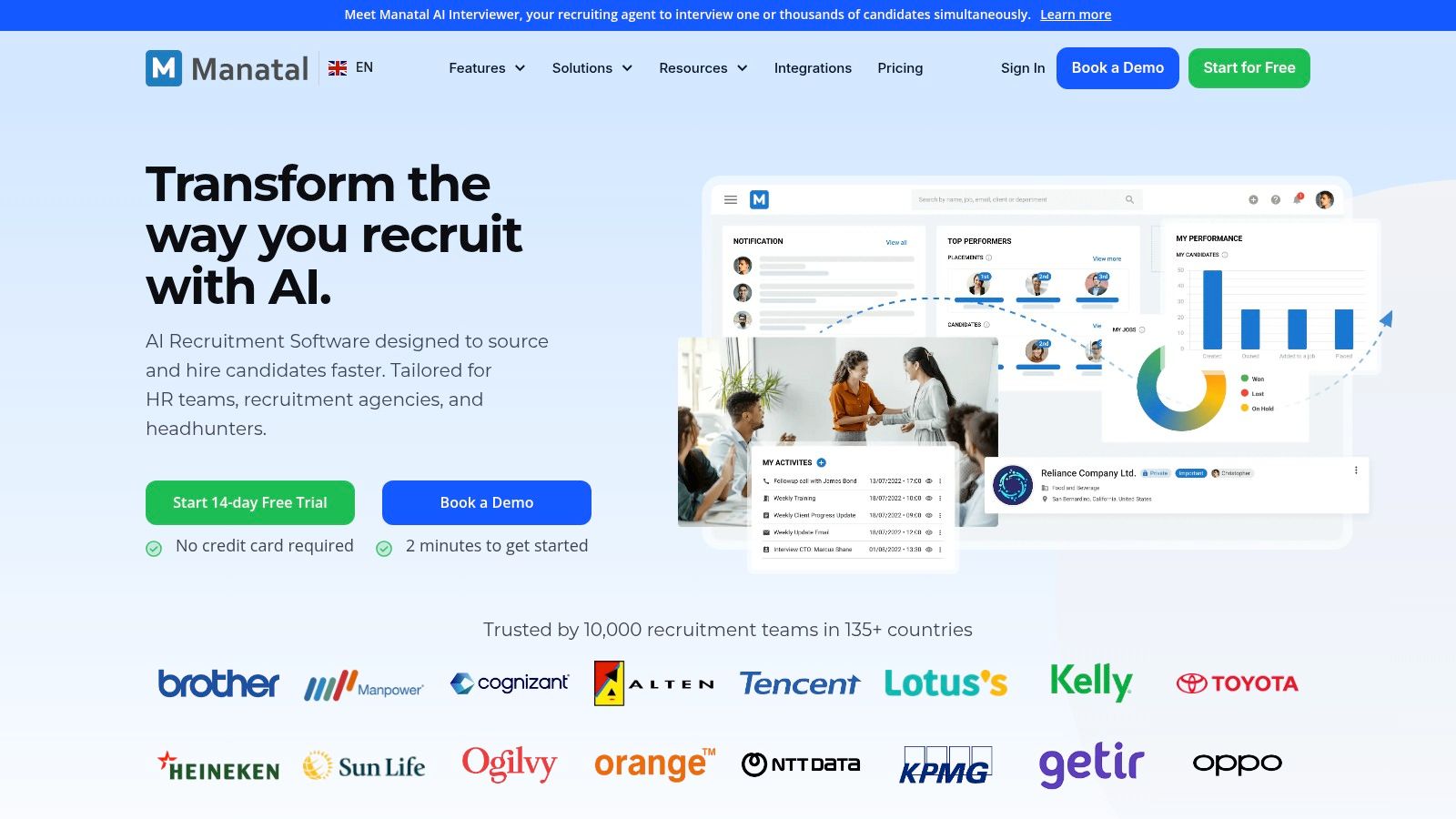
All three cover an ATS and some CRM without the weight of a full suite. Manatal offers AI scoring and enrichment, a LinkedIn extension, job-board posting and Spanish-language support, with a 14-day trial; SSO, API and groups sit on Enterprise Plus.
Zoho Recruit has an agency edition with client and contract management, a vendor portal, automations and parsing. Its use case is the SME already running other Zoho apps: native integration avoids duplicating data.
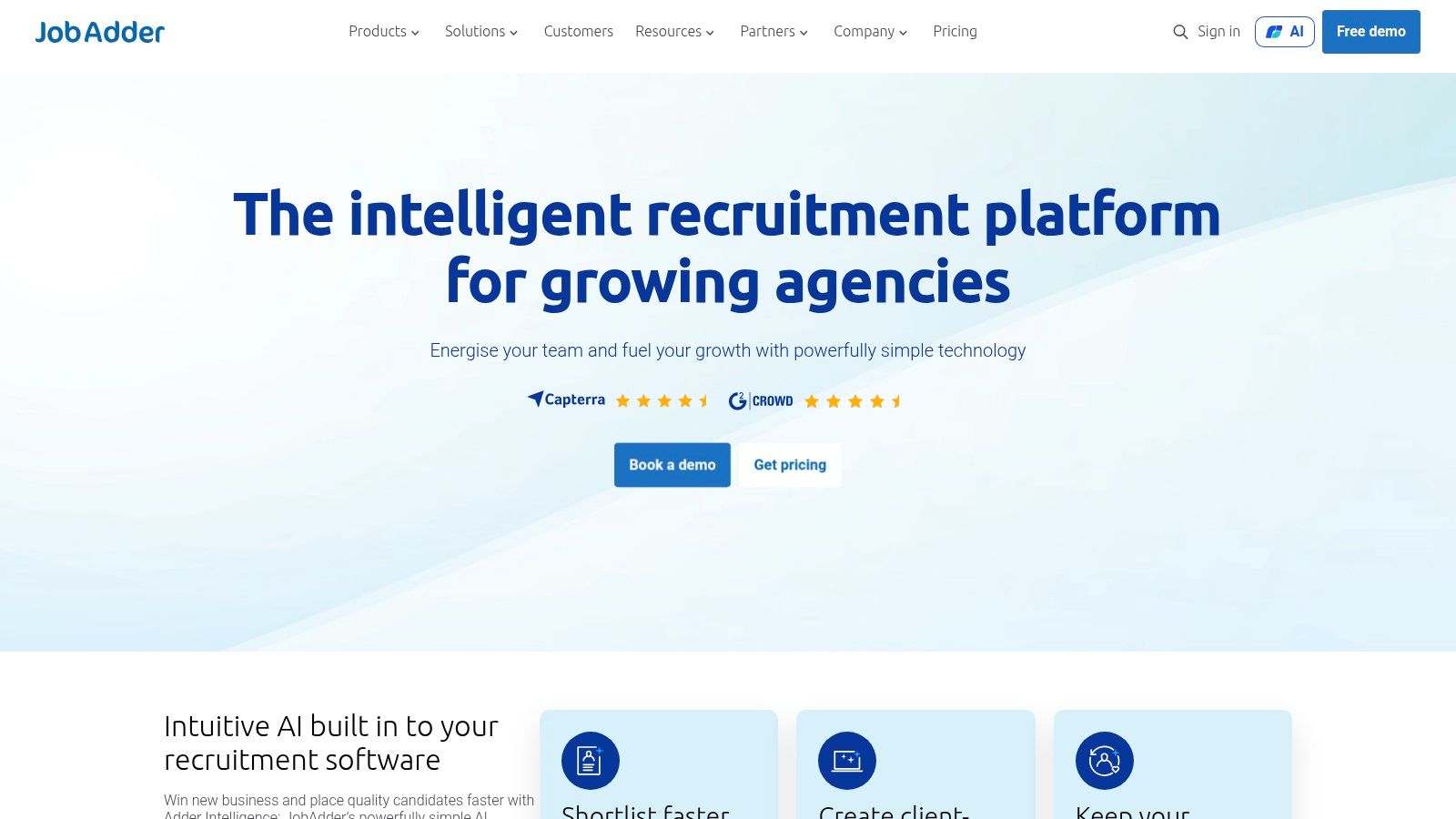
JobAdder balances ease of use and ecosystem, with 200+ integrations per its product information and AI for summaries and job descriptions. It publishes no universal rate: ask for the demo on your real workflows.
The risk in this group is mistaking order for speed: if the team still hunts for phone numbers and emails outside the platform, the ATS tidies the process without solving sourcing. Widen the comparison with this guide to the best ATS platforms in Spain.
Loxo, Crelate and Recruitly: executive search and business development
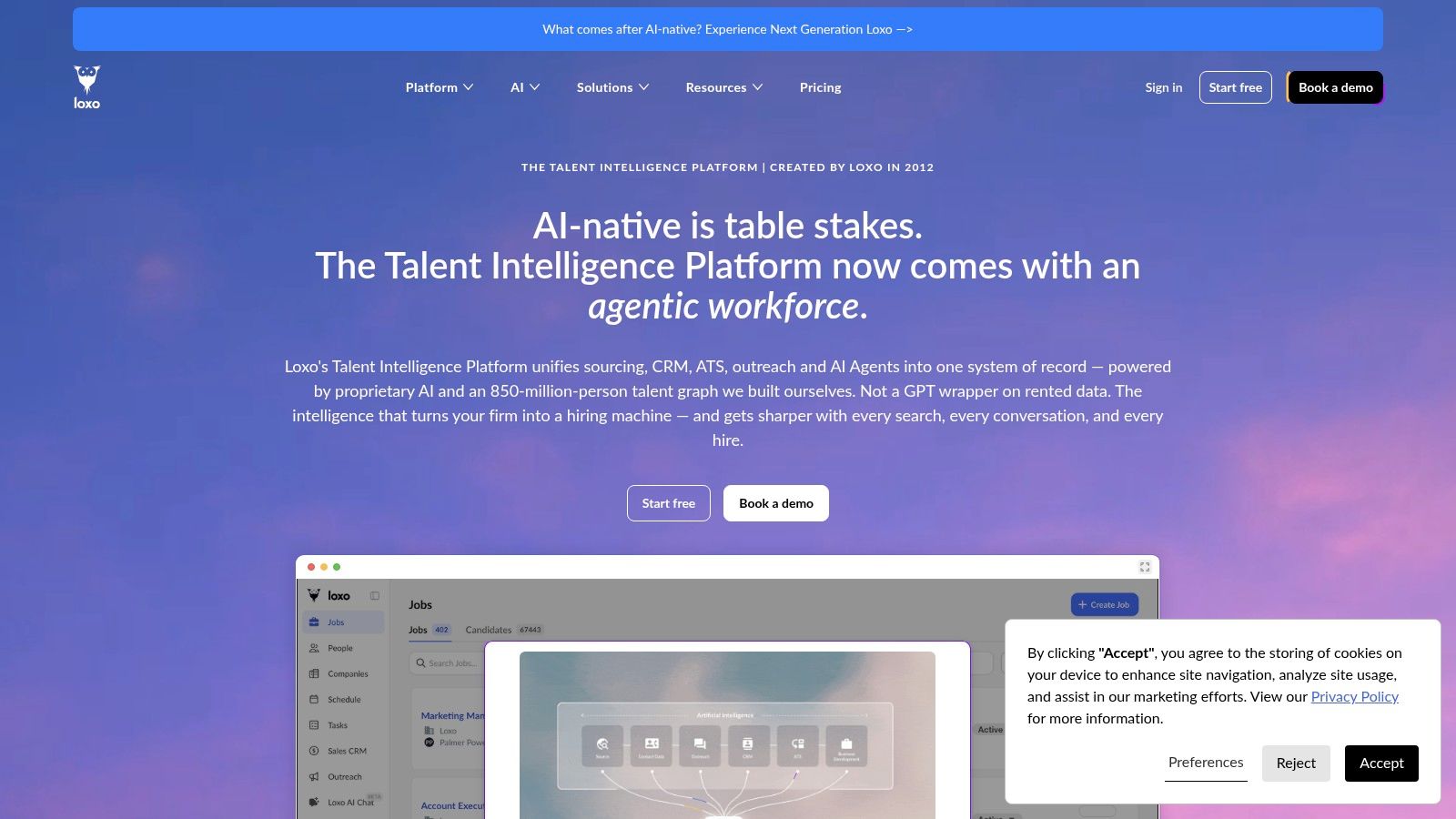
These three Recruit CRM alternatives share an assumption: the value sits in the relationship, not in application volume. Loxo concentrates sourcing, ATS, CRM and outreach on an integrated database with AI agents, and fits executive search and boutiques.
Crelate pairs a full ATS with a CRM built for business development: sales dashboards, open API, webhooks and client portals. It preserves the context of a search that starts as a sales conversation and ends in a placement.
Recruitly centralises CRM, ATS, trigger-based automations and AI for assessment. It is more emerging than Bullhorn or Vincere, with web and data modules still evolving, so pilot it before centralising.
Reviews of contact-data quality outside English-speaking markets are mixed: test with hard-to-fill roles.
How much it costs to replace Recruit CRM in 2026
Pricing splits into two models. Bullhorn, Vincere, JobAdder and CEIPAL sell by quote, with no comparable public rate card. Manatal, Zoho Recruit and the sourcing platforms publish prices, which lets you cost the move before the demo.
On the sourcing side, HeyTalent's plans start at €109/month billed quarterly for up to 2,000 candidates a month and run to €599/month for up to 14,000, with unlimited users and unlimited CSV exports. Annual billing applies a 15% discount, bringing the entry plan to €93/month.
HeyTalent charges per organisation rather than per seat, which the company says amounts to saving up to 5x the cost of LinkedIn Recruiter. That saving grows with team size and does not apply the same way to a solo recruiter. Terms change: check them on HeyTalent.